
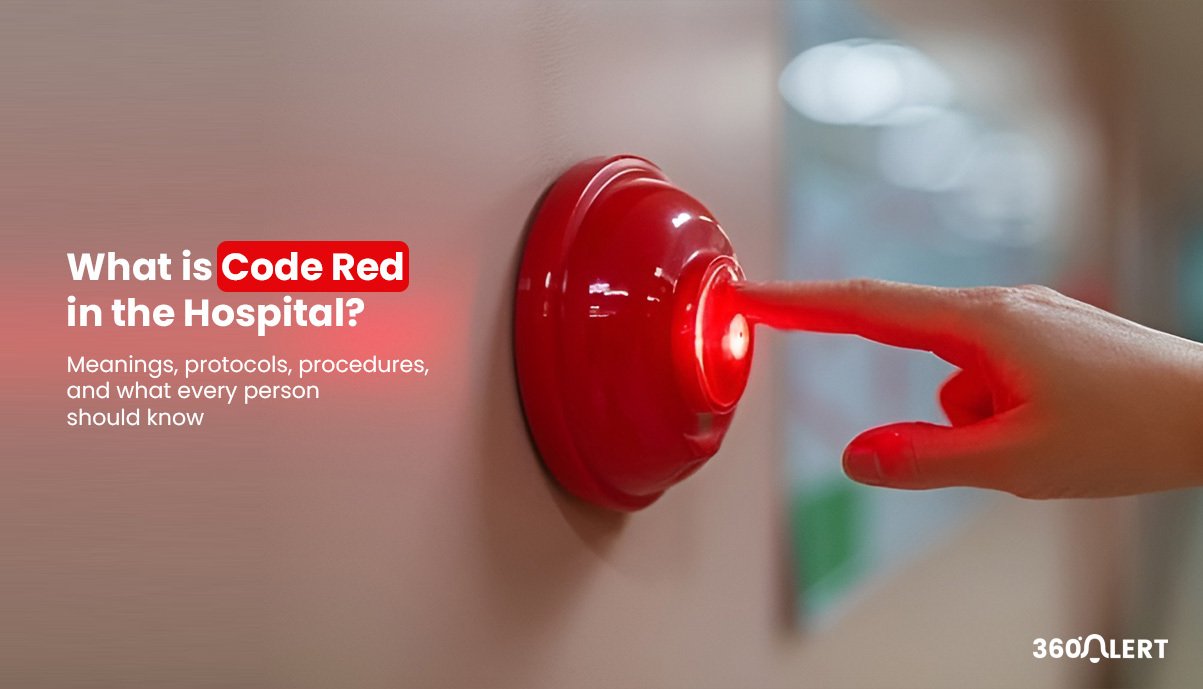
Hospitals operate around the clock, caring for thousands of vulnerable patients. They also have a large staff, complex infrastructure, and busy staff. In an emergency, every second counts. Code Red is a critical alert.
In hospitals, code red is a signal that smoke or Fire has been detected in the building. It is common for the announcement to include a location such as “Code Red – third floor – east wing” so that staff members can respond accurately without causing panic among patients or visitors.
This comprehensive guide covers all aspects of code red, including its meaning and definition, its role in hospitals, step-by-step instructions, patient and staff roles, and international variations. Knowing Code Red, whether you’re a healthcare professional, patient or visitor, can save lives.
Why do hospitals use a color-coded emergency system?
The hospital relies on standard codes to discreetly and quickly communicate threats. It is possible to cause chaos and injury during an evacuation by saying “fire” on the intercom. Color codes help trained staff mobilize quickly and maintain a calm environment.
Code Red, for example, is not universal. Codes may vary slightly from hospital to hospital and by state or country, but they are consistent in North America, Australia, New Zealand, and elsewhere. To maintain safety, many facilities adhere to guidelines issued by The Joint Commission or other equivalent organizations.
Common Hospital Emergency Codes: A Quick Reference
The following table contains codes commonly used by hospitals in the US, Canada and Australia. (Always confirm your local facility’s usage, as variations may exist.
This chart highlights the differences between Fire and medical threats (Code Blue) and how it specifically addresses fire threats.
| Code | Definition | Typical Response |
|---|---|---|
| Code Red | Fire or smoke | Activate RACE protocol; fire team responds |
| Code Blue | Adult cardiac/respiratory emergency | Rapid response team for resuscitation |
| Code Pink | Infant/child abduction | Lockdown + search; notify security and staff |
| Code Orange | Mass casualty / disaster / hazardous spill | Activate the disaster plan |
| Code Black | Personal threat or bomb threat | Security / police involvement |
| Code Yellow | Missing patient or internal disaster | Search teams and facility lockdown |
| Code Silver | Active shooter or weapons threat | Lockdown, shelter in place |
| Code Gray | Combative or violent person | Security team response; de-escalation procedures |
What Does Code Red Mean for Hospitals? Details of the Code Red in Hospitals
A code red light in a medical facility indicates a fire or smoke is present, or that one is suspected. The cause could be a small electrical blaze in a utility area, a kitchen accident, smoking materials, dust or steam, or even an alarm falsely triggered by dust or smoke.
In most cases, the hospital’s code-red alarm system triggers overhead announcements. It may also activate visual strobes or automatic notifications for fire departments. In some facilities, the announcement includes the exact location to guide the response team.
Does code red always mean a fire? Almost always. Code Red can be used in different ways in older facilities or specialized ones (e.g., MRI suites may have their own Code Red protocols to address fires near magnetic equipment); however, its meaning is always fire-related.
Code Red Hospital Protocol: Step-by-Step Procedures
When Code Red is announced, hospitals will follow the structured Code Red procedures based on RACE (a proven acronym), which are taught during staff training.
- R – Rescue/Remove. Move immediately anyone in danger to safety. Prioritize patients unable to move themselves. If necessary, use wheelchairs or beds.
- A – Activate/Alarm Pull the nearest fire-alarm pull station, if sounding. Inform the operator or dial the emergency line (often a special internal number). Please provide the exact location.
- C – Confine/Contain. Close all the doors and windows to contain the smoke or Fire. When it’s safe, shut off oxygen and flammable gas. Clear the halls for emergency personnel.
- E – Extinguish or Evacuate :
- Use the PASS Method: Pull the pin. Aim at the base. Squeeze the handle. Sweep left to right.
- Evacuate the area if smoke or Fire is heavy. First, evacuate horizontally to a safe area behind the fire doors on the same floor. Then, if necessary, move vertically by using stairs. Never use elevators.
A dedicated fire response hospital team (often comprising security, maintenance staff, and clinically trained staff) coordinates the arrival of firefighters. The team can wear easily identifiable vests or “fire caps” in certain facilities.
RACE For Fire Safety Training PPT Example
RACE is a foundational element of Code Red Hospitals’ fire protocol. It appears in training manuals worldwide.
Who is responsible for responding to code reds in hospitals? Staff Roles Explained
Nurse responsibilities during code red are critical:
- Prioritize patient safety and mobility.
- Close doors in patient rooms.
- Prepare to evacuate horizontally
- Document any actions you can if the time permits.
- reassure patients and visitors
Staff roles during hospital code red include:
- Medical professionals support patients’ movements and medical needs during relocation.
- Security/Fire Team Lead containment, fight minor fires, and coordinate with external firefighters.
- Maintenance/Engineering — Shut off utilities, manage HVAC to prevent smoke spread.
- Administrative/Operators — Make announcements, notify external emergency services.
- Staff — Know the evacuation route and assembly location for your department.
Hospital protocol for code red visitors is straightforward: Remain calm, obey any instructions given by uniformed employees, and do not interfere with emergency responders.
Code Red Hospital Evacuation Process
While evacuation is always a last option, there are logical steps to follow:
- Horizo ntal evacua-tion
- Vertical evacuation. Use the stairs to reach a lower level or go outside if your entire floor has been threatened.
- Full-building evacuation: Rare, only when ordered.
The hospital has designated safe zones and evacuation chairs for patients who are not ambulatory. They also use “defend-in-place” strategies in intensive care units, where moving patients with critical illnesses is dangerous.
What should patients be doing during a code red?
- If instructed, remain in bed.
- Be sure to follow all staff instructions.
- Keep low in the event of smoke (crawl, if necessary).
- Do not use elevators.
- Focus on safety and keep personal items to a minimum.
Patient safety is prioritized during a code red. Staff are trained to move oxygen tanks and monitors safely.
Code Red vs Code Blue Hospital: Key Differences
- Code red: Fire/smoke- environmental threat; everyone helps to contain or evacuate.
- Medical emergency (cardiac arrhythmia) – The clinical response team rushes over to the patient’s bedside to perform CPR and defibrillation.
Code red vs code pink hospital:
- Code Pink can be used to indicate infant abduction, lockdown, and search (in some areas), or neonatal emergencies.
- Code Red focuses primarily on fire suppression and its impact on a building.
These distinctions help avoid confusion and ensure the right team responds.
Variations in Code Red Hospital Canada and Australia
- Hospital Code Red Canada, meaning Fire/smoke, is almost universal, in line with US practices.
- Code Red Hospital, Australia – meaning Fire or smoke; many States follow standard color codes in emergency planning standards.
- In the UK National Health Service (NHS), color codes are not standardized, and many trusts now use plain-language statements, such as “Fire on Ward 3”. In certain contexts, the term “Code Red” is used to refer to major trauma activation protocols, major haemorrhage procedures, or rapid reaction teams, rather than Fire. Check the local NHS policies. Often, fire alarms will be announced.
- In countries that follow Western models, the code red color in hospitals means “fire”. Some countries use plain colors or language.
Code red in hospitals: a fast, coded way to communicate that protects vulnerable patients from panic while also mobilizing experts.
Insights from the real world: What happens during a Code Red at a hospital
In a typical scenario:
- A nurse smells smoke in a storage room.
- She calls out, “Code Red in the basement, B12.” “
- Employees in the area carry out RACE.
- Within minutes, the fire department arrives at the scene. They extinguish any potential sources of ignition (e.g., a faulty outlet) and confirm “Code Red All Clear” following an inspection.
Code Red hospital training requirements, including real-life incidents such as kitchen fires or electrical faults, have been met.
Hospitals often conduct unannounced fire drills to test their response time and identify any gaps.
Code Red Hospital Policies, Training, Compliance and Best Practices
During orientation, all staff must receive Code Red Hospital training. This is repeated annually. Topics covered include RACE/PASS training, evacuation routes, fire extinguisher use, and patient handling.
Hospital Code Red policy typically requires:
- Functional sprinklers and alarm systems.
- Clear signage, maps, and directions
- Testing and maintenance should be done regularly.
- Documentation and documentation of drills, incidents and other events
- Rapid, discreet response.
- Reduced panic.
- Improved coordination.
- Complying with safety regulations
Best practices:
- Where possible, use plain English alongside codes.
- Incorporate technology (mass notification apps, digital evacuation maps).
- Include patients and their family members in basic awareness. (without creating fear).
- Use drill debriefings to fine-tune procedures.
Checklists for Code Red Hospitals include: Doors closed, oxygen off when possible, patients identified, and routes cleared.
Patient Guide and Visitor Guide: Staying Safe
In a hospital, you may hear an announcement that reads ” Code Red.” This means.
- Remain calm and pay attention to the instructions.
- Do NOT try to investigate or take photographs.
- Always follow the staff; they will lead you to the safest route.
- When alone in the room, close the door and listen for instructions.
- Know your two escape routes from the room or ward.
The meaning of hospital fire code red is that it protects everyone by turning potential chaos into a well-practiced, orderly response.
FAQS: Answering Your Top Questions
In a hospital, what is a Code Red?
The alert is for an emergency fire or smoke. To protect patients, staff, and visitors, they follow containment protocols and evacuate when necessary.
How many colors do you see in a hospital’s code?
Codes like Code Red for Fire, Code Blue for adult medical emergencies, Code Pink or Code Orange for disasters and infant abductions are all common. Details are listed in the table above. Confirm local information.
Code white: What is it?
Code White can mean different things in different hospitals. For example, some hospitals use it to indicate a child with a medical emergency. Other hospitals may use it to indicate armed or violent people who need security.
Code red: What does it mean for the NHS?
Code Red is rarely used to announce fires in the UK NHS. Code Red may activate teams such as trauma or major event teams. Always check your hospital’s emergency policy.
What happens when a code red is activated in a medical facility?
Staff will execute RACE and contain the threat. If necessary, they’ll evacuate while coordinating with firefighters to ensure public safety.
Do not move independently or take elevators.
Are code red drills mandatory?
Staff are required to conduct fire drills regularly to comply with regulatory standards.
Conclusion – Preparedness saves lives
The Code Red system in a medical facility is much more than an alert. It’s a system carefully designed to protect those most vulnerable from one of life’s most deadly emergencies, Fire. The code red hospital protocol includes the definition, step-by-step procedures, specific nurse responsibilities, safety measures for patients, and differences between countries.
Key takeaways:
- Know RACE: Rescue, Alarm, Contain, Extinguish/Evacuate.
- Follow the staff’s directions and never use elevators.
- Hospitals must train constantly because seconds are crucial.
- Codes can vary. Make sure you are familiar with the local system.
If you’re a healthcare professional, make sure to review the hospital code red policy. You can also actively participate in drills. You can ask the staff at your hospital about emergency procedures when you arrive as a guest or patient.
Stay informed. Keep yourself informed. Knowing what you’re doing could be the difference between life and death.