
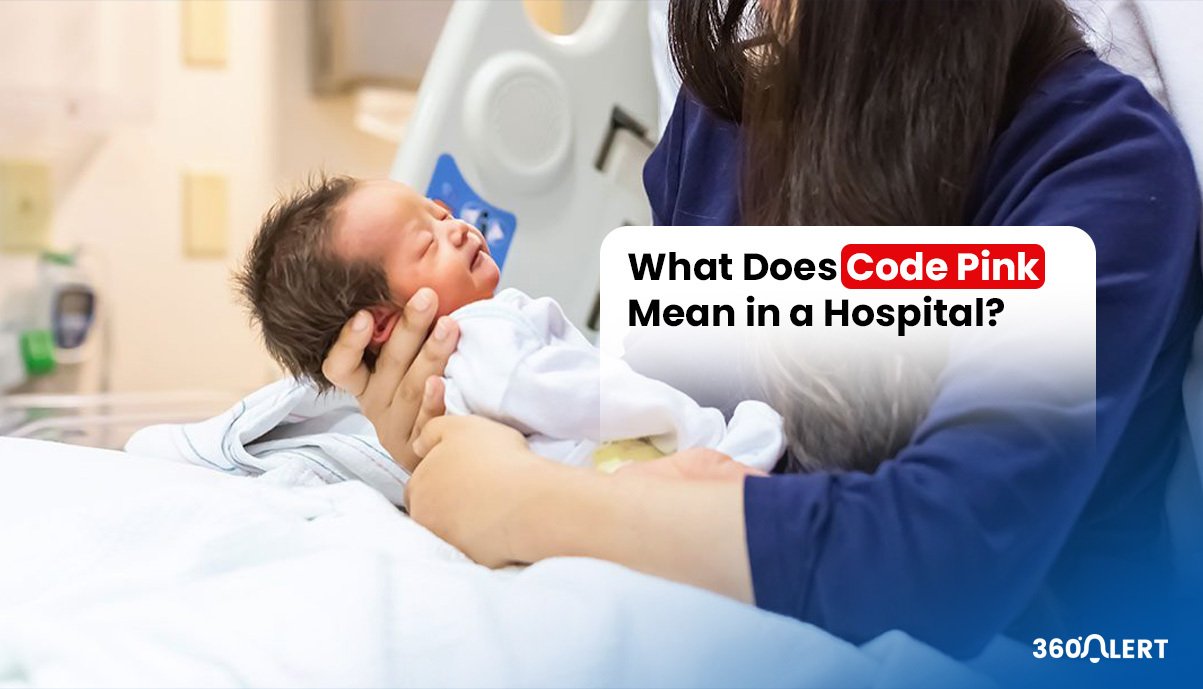
You might hear the voice of a public address announce “Code Pink” while you are in a waiting room in a hospital or in a maternity unit. Emergency color codes were designed to quickly communicate vital information to hospital staff without causing panic amongst patients and visitors. Human nature dictates, however, that hearing a new emergency alert will immediately raise your heartbeat.
You are not the only one who is wondering what an alert means. Code Pink is a serious emergency page that’s widely recognized in the healthcare sector. This indicates an actual or suspected infant abduction.
The hospitals take their most vulnerable and youngest patients very seriously. Every second counts when an infant is missing. Nurses, security personnel and administrators must immediately coordinate their response to the protocol.
This guide will explain what goes on behind the scenes when a Code Pink is activated. Learn how medical facilities secure their perimeters and the security measures taken to protect infants. You’ll also learn what to do if ever you find yourself in a building during a Code Pink alert.
The Definition of Code Pink
Code Pink is used by the majority of hospitals in the United States to alert them when an infant has been abducted. The exact age range varies slightly from institution to institution but it is usually a missing infant who is younger than 12 months. Some hospitals include children up to the age of 13, but older children may be covered by separate alerts, such as Code Purple.
Hospital policy requires that employees act immediately if they suspect a missing infant. The employee immediately calls the security control center of the hospital or dials the internal emergency number. The operator broadcasts Code Pink on the public address system. It is usually repeated three times, and specifies the floor or unit that the incident occurred.
The goal is mobilize an immediate, building-wide search. Secure the exits of the building before any potential abductor can leave.
Exceptions to Rule: When Colors Mean Something Different
Regional variations are possible because hospital emergency codes do not follow a federal standard. State hospital associations recommend standard codes but individual hospitals still have their own policies.
There are some notable exceptions to the rule. States like Maryland, Louisiana and Kentucky recognize Code Pink for an abduction of an infant. In Ohio, a Code Pink is traditionally used to indicate a medical emergency for a child, while an abduction of an infant might trigger a different response protocol. In Oregon and Washington, hospitals often call out “Amber Alerts” over their paging systems for missing children rather than using a color coded system.
You can find placards in the hallways, waiting rooms and patient rooms that explain their specific emergency terminology.
Plain Language Announcements: A Shift in the Direction
In the past decade, many healthcare organisations have completely abandoned color-coded warnings. It’s simple: Color codes are difficult to remember and can lead to confusion among contract staff, visiting physicians, traveling nurses or other healthcare workers who may work in multiple facilities that use different systems.
Safety organizations instead advocate “plain language” announcements for emergency situations. Plain language alerts give specific information about the danger without having to decode colors.
You might not hear the phrase “Code Pink” if you’re in a modern hospital. The overhead page may sound one of the following variations instead:
- Missing Person + Location + Security Alert: Widely used in New Jersey and Colorado by staff to alert them to a missing child, adult or infant.
- Security alert + Descriptor+ Age: This is a common format used in Florida to indicate a possible abduction.
- Missing infant / child: Used by some parts of New York State and North Carolina in order to expressly state the emergency.
Some associations recommend that staff use the term “missing persons” instead of “abduction”, unless it is absolutely certain a crime occurred. This can help maintain a calmer atmosphere while the search is being conducted.
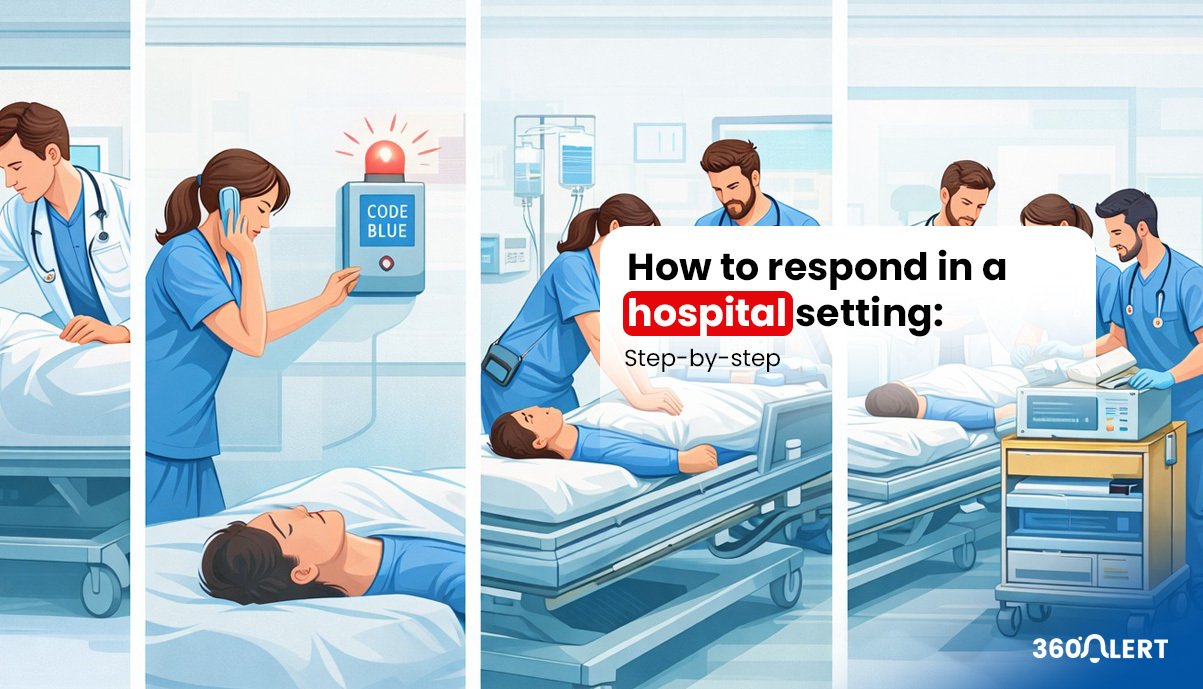
How to respond in a hospital setting: Step-by-step
The hospital becomes a safe environment when the Code Pink (or plain language equivalent) sounds and an infant has been confirmed as missing. We can use comprehensive policies, such as the Loma Linda University Health guidelines that are publicly available, to see how healthcare workers have been trained.
Immediate Floor Response
When a baby goes missing, an employee will make a quick visual inspection of the area. They then alert all staff in the vicinity. The charge nurse or department head immediately assigns staff to cover all exits and stairwells in that unit. The other staff members start a systematic search in every patient room, closet and bathroom.
The department head must also account for all other infants in the unit, to make sure that no child is missing.
Perimeter lockdown and exit control
Immediately after the overhead message, staff members assigned to the main lobby of the hospital and the ground-level exits will take their positions at the door. The staff are instructed to stay at the exits until they are relieved by security officers or until “All Clear” has been announced.
During this period, no one carrying an infant is allowed to leave. Visitors are politely informed that an emergency situation is taking place and asked to wait. Staff will take note of a visitor’s physical description if they refuse to allow them to be inspected and try to force the bag out.
Security and Command Post Operations
The central security team of the hospital is the nerve center for the operation. On receiving the first call, the hospital’s central security team dispatches officers to the floor in question, announces the code throughout the building, and sets up an incident command center. When an abduction has been confirmed, the hospital security department contacts local law enforcement such as city police and county sheriffs departments.
Supporting Families
The patient care continues even during a crisis. Nursing staff will immediately set up a private room in the hospital for the missing baby’s family. To preserve evidence, the original hospital room has been sealed and all items are left untouched. Administrative supervisors contact the hospital’s clinical laboratory or blood bank in order to obtain the baby’s blood samples and footprints. These can be crucial for later DNA identification.
Preventive Measures: Stop Abductions before they Happen
Code Pink emergencies are extremely rare due to the intensive preventative security measures used by modern maternity units and neonatal intensive-care units (NICUs). To deter abductors, hospitals use a combination of technology and procedural rules.
Electronic Monitoring Systems
The majority of newborns are equipped with an electronic transmitter around the ankle as soon as they are born. The sensor is connected directly to the hospital security system. The sensors will sound an alarm if someone tries to carry a baby to an exit. In many hospitals, they’ll lock the doors automatically to catch the suspect.
Strict Identification Protocols
Hospitals provide matching identification bands for the baby and its parents or guardians. Nurses carefully compare the wristband numbers of the adult and the infant before releasing an infant for feeding or discharge. Infants are also only released to parents or guardians after their photo ID is verified.
Transport Rules
In order to prevent unauthorised individuals from leaving with a child, hospitals enforce strict rules regarding transportation. In the hospital halls, employees, parents and guardians almost never carry an infant. Baby’s must be placed in a bassinet or crib. Staff are trained to act immediately if they see a person walking down a hospital hallway with a baby.
Employee Identification
All hospital staff are required to wear badges that can be seen clearly. Some maternity units go one step further and require that employees authorized to care for infants wear badges with a special color or emblem.
What Patients and Visitors should do during a Code Pink
Your cooperation is crucial to the success and efficiency of the hospital response if you are waiting for an appointment or visiting a patient when Code Pink is declared. Avoid distracting the staff.
Do not leave the building. Do not move from one floor to another. The hallways must be clear of obstructions for law enforcement and security personnel. You can either return to the patient’s room, or remain seated in waiting area.
Expect delays at exits
You may find that the hospital staff will block your exit if you are already close to it. Be patient. By getting angry or pushing past staff members, you will only distract them from the search for your child.
Co-operate with Bag Checks
Staff members or security officers may ask to inspect your duffel bag, large backpack, purse or oversize coat. They can quickly rule you out if you comply, so they can concentrate on the actual threat.
Keep your own children close
Keep your children close by if you have brought them to the hospital. The hospital staff will likely approach you if you have a baby to confirm your identity.
Report suspicious behavior
Tell a nurse or officer of security if you see someone acting oddly before the announcement, such as someone in civilian clothing carrying a child toward a staircase or someone removing a security anklet.
FAQs (Frequently Asked Questions)
Code Pink is it always an emergency?
Not always. To ensure that their staff is vigilant, healthcare facilities must conduct regular drills for emergency preparedness. Loma Linda University Health conducts, for example, quarterly infant abduction exercises. These drills are evaluated by the hospital to find weaknesses in its security perimeter, and to improve response times. Sometimes, false alarms can also happen if an ankle monitor falls off the leg of a baby or malfunctions.
How long is a hospital lockdown?
The perimeter lockdown will last until the appropriate authority is notified, which is usually the Incident Commander, or the head of security. The paging operator will then announce “All Clear” three times on the speakers once the infant has been located or the false alarm confirmed. Normal hospital operations and visitor movements resume at that point.
Who usually abducts babies from hospitals?
According to data gathered over the years by the National Center for Missing & Exploited Children, the vast majority of hospital abductor are strangers. To gain entry to the maternity unit, they often pose as nurses or other hospital staff. It is for this reason that strict employee badge protocol and “bassinet-only” transport rules are heavily enforced.
Keep informed and prepared
Code Pink is an event that is high-stress, but also shows how hospitals protect their patients. The elaborate procedures, such as locking down the stairwells and establishing command post, ensure that every attempt to harm or steal a child will be met with a massive, immediate response.
Abductions are extremely rare because infant security systems heavily rely on preventative technology, and the vigilance of staff. Understanding what happens at these crucial moments will help you to become a more cooperative, aware visitor.
Take a look at the emergency codes chart when you next visit a hospital. Understanding the meaning of each alert will help you respond safely and calmly to any emergency.
Related Topic:
What is Code Red in the Hospital?
What is Code Gray?
What is code blue in a hospital?