
How to secure garage door access comes down to layered protection, starting with a guard over the emergency release. A rolling-code opener stops copied remote signals, while a compatible manual lock holds the door during long absences. Locking the side door into the house closes the last easy route inside.
Strong garage door security never depends on a single gadget. Daily habits matter just as much, especially closing the door every time you drive away. Every change below also keeps the opener’s emergency release working, because a heavy door with broken safety features is a hazard of its own.
Why garages attract break-ins
Garage security is easy to overlook because the door gets used so often that a gap starts to feel normal. The most common weak point is an unlocked side door, followed closely by a remote left in a car parked outside.
An attached garage also creates a second boundary inside the home. The door from the garage into the house deserves the same deadbolt you would fit on a front door.
The Bureau of Justice Statistics estimated an average of 3.7 million household burglaries a year between 2003 and 2007. The figure covers every entry point, so treat it as a reminder of scale rather than a garage-specific rate. Simple habits act as cheap crime prevention, while hardware upgrades add property protection for everything stored inside.
Start with a garage door security audit
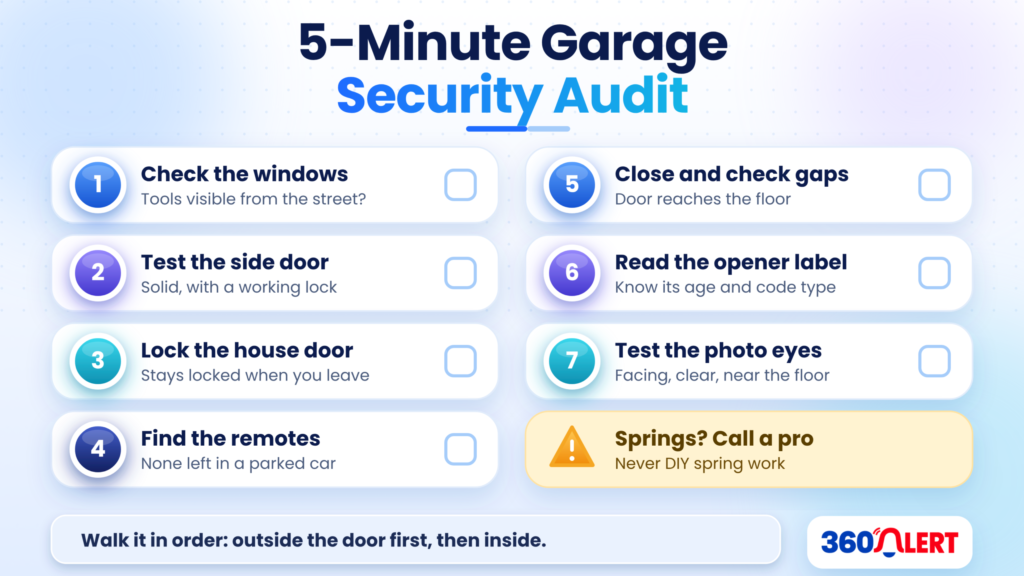
Learning how to secure your garage starts with a five-minute walk that shows which fixes matter most. Run through these checks in order, starting outside the door before moving inside.
1. Look through the garage windows from the driveway to see whether your tools are visible from the street.
2. Try the walk-through service door to confirm it is solid with a working lock.
3. Check that the door from the garage into the house stays locked when you leave.
4. Note whether an opener remote lives in a car that parks outside overnight.
5. Close the main door to confirm it reaches the floor without gaps.
6. Find the opener’s model label to learn its age.
7. Confirm the photo-eye safety sensors near the floor face each other with nothing blocking them.
Leave spring work to a trained technician, since garage door springs hold enormous tension. Manufacturers warn that an unbalanced door can cause serious injury, so note any problem during the audit for a repair visit.
Garage door break-in prevention: free fixes first
The most effective steps against a garage break-in cost nothing at all. Many garage entries need no tools at all, since an open door hands a thief everything inside.
Close the door every time
Watch the door until it reaches the floor whenever you drive away. Keep the threshold clear, since a bucket in the closing path makes the safety system reverse the door back open.
Keep the remote out of your car
A garage door remote left in a car can give a thief access to your home once the car is broken into. Swap the visor remote for a keychain model that stays with you instead of the car.
Cover garage windows
Frosted window film stops passers-by from seeing what is stored inside, including whether a car is parked there. Lock every window latch as well, since a cracked-open window gives an easy reach inside.
Protect the garage door emergency release without disabling it
The emergency release lets the door disconnect from the opener during a power cut. Federal rules in 16 CFR Part 1211 require a red, easily identified release handle that needs no more than 50 pounds of force.
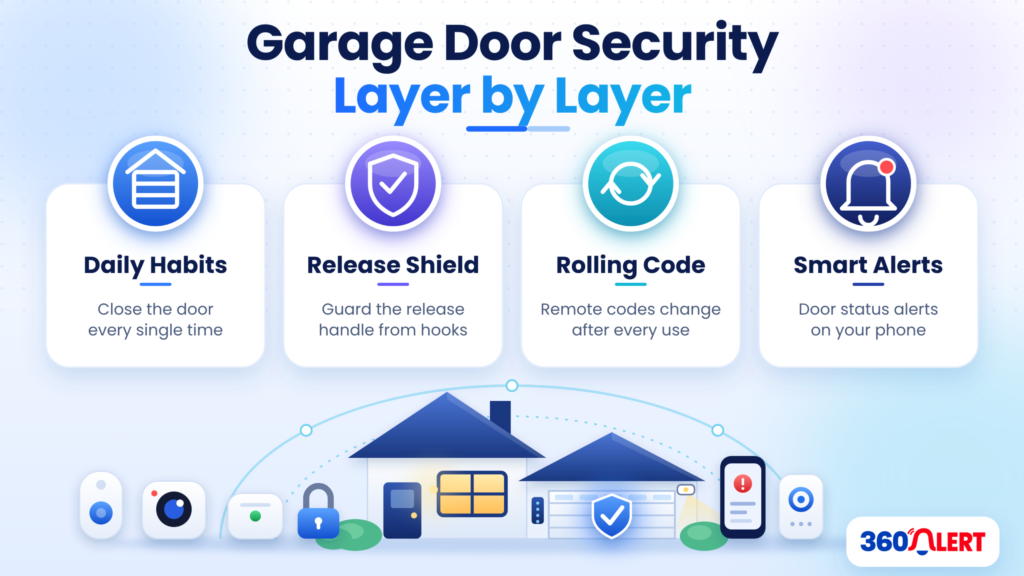
Burglars sometimes try to snag that cord from outside through the gap at the top of the door, a trick known as garage door fishing. The fix is to block outside access to the release while keeping it easy to reach from inside.
A light zip tie on the release lever is common advice, though it only works if the tie still snaps under a firm pull. Never cut the cord off completely, because people inside may need the release during a fire.
Use a garage door shield
A garage door shield is a purpose-built guard that wraps the release area so a hook from outside cannot reach the handle. Choose a shield made for your opener type, and test the release from inside once it is fitted.
How to secure a garage door from inside
Manual locks add real strength, but they belong on a door that the opener will not try to move. A garage door lock left engaged while the opener runs can bend the track itself.
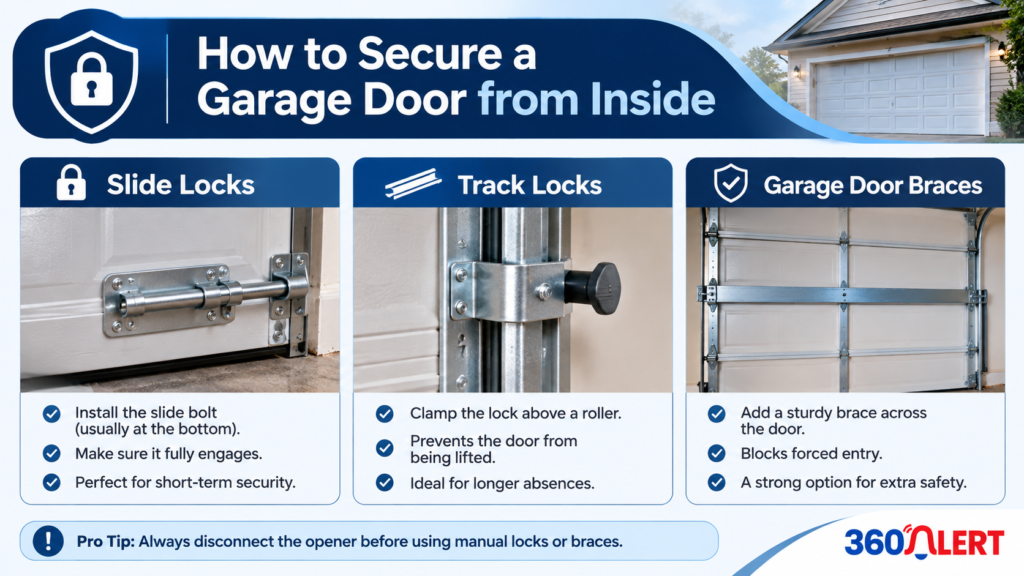
Slide locks on the bottom panel
Many sectional doors ship with a factory slide bolt near the bottom panel. Use that designated hardware, checking that the bolt seats fully without bending the track.
Track locks for long trips
A track lock clamped just above a roller stops the door from lifting while you are away for days. Put a note on the wall control so nobody presses it while the lock is engaged. Remove the lock before you restore power to the opener.
Garage door braces
A garage door brace adds a physical barrier across the inside of the door. Pick a brace sized for your door type, since a generic bar forced into place can knock rollers off their track.
During a power outage
Follow the opener manual for manual operation if the power fails with the door closed. Once you pull the release, the door runs free of the opener, so lock it only with hardware built for that door.
Securing garage doors from the outside
Exterior protection starts with the opener itself, including any keypad mounted beside the door. Some doors also have a keyed exterior lock, mainly in garages with no other way in.
Keep any lock cylinder clean, following the maker’s maintenance guidance. A professional should confirm that a keyed release suits your opener before you add one.
Secure garage door opener controls
A secure garage door opener pairs modern access control with working safety features. Start by reading the model label on the opener motor. The maker’s support page lists the remotes that work with it.
Rolling code on modern openers
According to DASMA, the trade association for door and access system makers, a rolling-code remote changes its code after every use. Opener makers give the feature their own brand names, so check your opener’s manual for the term your model uses.
Older fixed-code remotes send the same signal every time, so a recorded copy can open the door later. Replace an opener that still uses a fixed code, especially one with dip switches inside the remote.
Can a garage door opener be hacked?
Researchers have found a garage door vulnerability in specific opener models over the years. Those findings apply to the tested products, so the practical step is to run supported equipment with current updates.
Keypad safety
Choose a garage door keypad code that avoids birthdays, since family dates are easy to guess. Change the code after a contractor finishes work, since a shared code stays valid until you replace it.
Garage door opener security for smart apps
Protect the opener app with a unique password that you use nowhere else. Switch on two-factor authentication wherever the app offers it. Review shared users every few months, removing anyone who no longer needs access.
How to make a garage door more secure with smart upgrades
A smart garage controller adds door status alerts to many existing openers, letting you close the door from your phone. Confirm compatibility with your exact opener before you buy, because smart controllers do not fit every system.
Auto-close on smart controllers
An auto-close schedule shuts a forgotten door at night without any action from you. Federal rules require any unattended close to sound an audible alarm with a flashing light for at least five seconds before the door moves.
Door position sensors
A garage door sensor reports the door’s position to your phone in real time. A garage door alarm contact links that status to your wider home security system, so an opening at 2 a.m. triggers the same response as a forced front door.
Photo-eye sensors work differently, since they exist to stop the door from closing on a person. DASMA advises mounting them no higher than six inches above the floor, which means they protect people rather than lock anything.
Floodlight cameras
A garage door surveillance camera with a floodlight lights up the driveway while recording activity. Add garage door motion lighting along the side path, where most people approach a service door. Our guide on how wireless security cameras work explains camera placement before you choose a model.
Smart products worth knowing
The table below lists common product types for each layer, with well-known brands as examples rather than recommendations.
| Layer | Example brands | What it adds |
| Rolling-code opener | LiftMaster (Security+ 2.0), Genie (Intellicode) | Remote codes that change on every press |
| Smart garage controller | Chamberlain myQ, Meross | Open-door alerts on your phone |
| Smart lock for the side door | Schlage Encode, Yale, Kwikset | Keyless entry with access logs |
| Floodlight camera | Arlo, Blink, Google Nest, Ring | Motion lighting with video |
| Track padlock | Master Lock | Manual lock for long trips |
| Monitored alarm | ADT | Professional response to alerts |
Lock the garage security door into your house
The garage service door deserves the same attention as any exterior door. A deadbolt with a reinforced strike plate, fixed with long screws into the frame, resists a kick far better than a knob lock alone.
Keep the door from an attached garage into the house locked, even when the overhead door is closed. How to secure sliding doors covers the same reinforcement ideas for patio entrances.
Local codes often require a fire-rated door with a self-closer where a garage meets living space. Check your local rules before swapping that door, keeping any required closer in working order.
Reinforce the door itself
Garage door reinforcement that touches the brackets on a garage door track is technician work. Drilling into parts that carry the door’s weight can throw it off balance.
A garage door hinge reinforcement kit should match the exact door model. Ask an installer to fit it, confirming the door still moves smoothly by hand afterward.
Garage door security features to look for
Since January 1, 1993, every residential opener sold in the United States has had to meet the federal entrapment standard. Openers built before that date often lack photo eyes, which is reason enough to replace one.
When shopping for a new opener, compare these garage door security features before you buy:
● Rolling-code access: Confirm every remote uses a current rolling-code system that matches the opener.
● Battery backup: Choose a backup unit if power cuts are common where you live.
● Built-in locking: Look for a factory slide lock suited to the door style.
● Solid panels: Pick panels with few windows, using frosted garage door glass where windows are needed.
Garage door vacation mode before a trip
Some openers include a garage door vacation mode, usually a lock button on the wall console that makes the opener ignore remote signals. Turn it on before you leave, checking that your remotes no longer open the door.
A smart garage door opener on home Wi-Fi can confirm the door stays shut while you travel. Ask a neighbor to watch the driveway too, since an unfamiliar car parked outside is an early burglary warning sign.
Physical security still matters during a long trip away from home. A track lock fitted with the opener unplugged gives the door a mechanical stop that no remote can override.
Garage door protection from storms
Garage door protection can also mean wind resistance in hurricane zones. A security brace is not the same as a wind-rated brace, so ask a local contractor which products meet your building code.
Garage security tips for renters
Renters can still lock down a garage without drilling into anything. Removable window film gives renters privacy without damaging the glass, since it peels off cleanly at move-out. Ask your landlord before adding a track lock to a shared opener.
Free fixes vs paid upgrades
Start with the free habits, adding hardware only where the audit found a gap. The table also flags which jobs need a professional.
| Fix | Cost level | Who does it |
| Close the door, keep remotes inside | Free | DIY, as a daily habit |
| Window film | Low | DIY in under an hour |
| Garage door shield | Low | DIY with a release test |
| Track lock for trips | Low | DIY, never with power on |
| Smart controller | Moderate | DIY after a compatibility check |
| Deadbolt on the side door | Moderate | Locksmith recommended |
| New rolling-code opener | Higher | Professional install recommended |
| Spring repair | Higher | Professional only |
Conclusion
Learning how to secure garage door entry starts with daily habits, since an open door defeats every lock you own. Shield the emergency release without disabling it, using a manual lock only when the opener cannot run.
Smart alerts give you a final check on the door from anywhere. For a wider plan covering every entrance.
Frequently asked questions
Use the door’s factory slide lock, but only when the opener is unplugged. Lock the door from the garage into the house as well.
Layer your defenses so one mistake never leaves the garage exposed. A release shield blocks the most common trick, while a deadbolt protects the service door.
A light zip tie can stop a hook from pulling the release from outside, provided it still snaps under a firm pull from inside. A purpose-made shield does the same job without weakening emergency access.
Window film is the best low-cost upgrade, because it hides everything worth stealing from the street. Free habits such as closing the door every time cost nothing at all.
Switch on the opener’s vacation lock if it has one. With the motor unplugged, a track lock adds a mechanical stop for the whole trip.
Ask the building manager before changing any shared hardware in the garage. Personal steps such as keeping remotes on you still apply in every garage.
